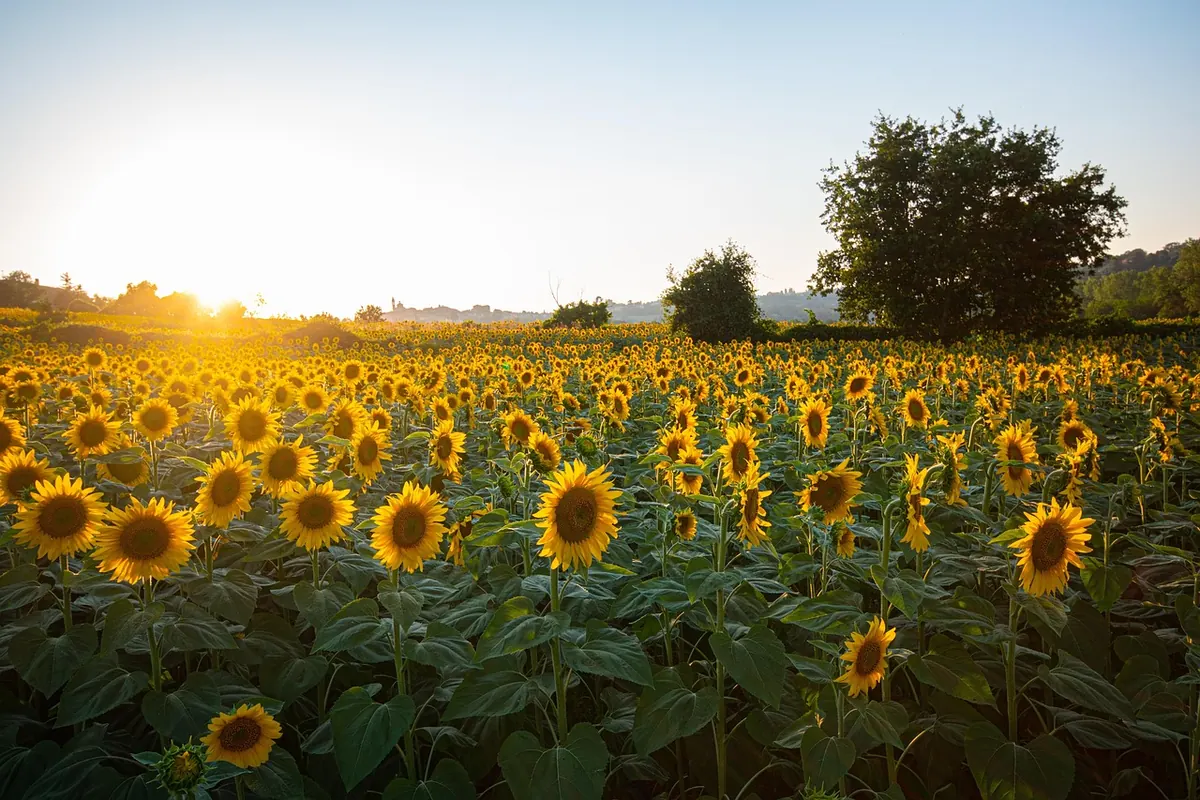
You do not need a garden to grow a sunflower. You need a pot, a spot that catches the sun, and a variety that stays within reach. Dwarf sunflowers finish somewhere between knee and shoulder height, depending on the cultivar, which makes them manageable on a balcony, a step by a kitchen door, or a patio corner that gets more light than you might expect. They are not miniatures in the fussy sense; they are simply sunflowers with shorter stems and a habit of flowering early, which suits container life well.
What follows is the practical part: pot size, light, water, support, and the small decisions that separate a stunted plant in a sad pot from a windowsill of nodding yellow heads by late summer.
Why dwarf sunflowers suit small spaces
Standard sunflowers are built to be taller than a person, and their root systems follow suit. Dwarfs have been selected for compact growth: most settle between 40cm and 90cm, with stems thick enough to hold a flower head without collapsing the moment a breeze picks up. That shorter stem matters more than it sounds. It means less leverage in the wind, less staking, and less chance of the whole thing tipping over on a gusty afternoon.
They also flower quickly. Many dwarf varieties will open their first bloom roughly two to three months after sowing, which is short enough to feel like a proper reward rather than an act of faith. If you sow a few seeds in succession, you can have flowers from midsummer into early autumn without much extra effort.
The pot comes first: size, drainage, soil
Beginners tend to choose a pot by look, then wonder why the plant sulks. Choose it by volume instead. A single dwarf sunflower wants a container with roughly 25–30cm of diameter and a similar depth as a minimum; the more compact bedding types will manage in that, while fuller doubles and slightly taller dwarfs do better in something closer to 35cm. Crowding two plants into one small pot is the most common mistake, and it shows up as thin stems and small flowers rather than an obvious failure.
Drainage is not negotiable. Sunflowers dislike sitting in wet compost, and a pot without holes will hold water at the bottom no matter how careful you are. If your container has a single central hole, add a layer of crocks or gravel and tilt the pot very slightly so water can escape. A saucer is useful in July, but empty it after rain.
For the growing medium, a soil-based compost with a little grit or perlite mixed through holds moisture without turning to sludge. Garden soil alone in a pot compacts and drains poorly. Fill to within 3cm of the rim so there is room to water properly.
- One plant per pot unless the container is genuinely large.
- Holes, always. Check before you fill.
- Weight matters on balconies: a large pot of damp compost is heavy, so position it before planting and check what your balcony can sensibly take.
- Raise the pot slightly on feet so air moves underneath.
Light: the one thing you cannot compromise on
Sunflowers mean it about the sun. Aim for six to eight hours of direct light a day, ideally including the stronger midday hours. A south-facing balcony in the northern hemisphere is the easy answer; east and west aspects can work if the pot sits at the brightest edge rather than tucked against a wall. North-facing spots will produce tall, pale, reluctant plants that flower late and lean hard towards the light.
Two small habits help. First, rotate the pot by a quarter turn every week or so; stems bend towards the sun and you will get a lopsided plant otherwise. Second, keep the pot away from the deep shade cast by walls, railings or larger plants. Reflected light from a pale wall is genuinely useful, so a bright corner against white render often outperforms a supposedly sunnier spot that sits in the shadow of a neighbour's extension.
Watering and feeding without overthinking it
Container sunflowers are thirsty once they are growing hard, but they still hate stale, saturated compost. The reliable method is to test before you water: push a finger 2–3cm into the surface. If it is dry at that depth, water thoroughly until it runs from the base, then leave it alone. If it is still cool and damp, wait a day.
In hot weather a mature plant in a modest pot may need water daily, sometimes twice on a baking day. In cooler spells, every second or third day is plenty. Water in the morning where you can, and direct the water at the compost rather than over the leaves, which reduces the chance of powdery mildew later in the season.
Feeding is simple: a handful of slow-release granules at planting covers most of the season, or use a liquid tomato feed every fortnight once buds appear. Do not overfeed with nitrogen-rich products hoping for size; you will get floppy leaves and fewer flowers. Pale leaves and slow growth usually mean hunger or waterlogged roots, and the two look different once you check the compost.
Staking for wind, weight and wild weather
Even short sunflowers benefit from support, and balconies are wind tunnels. A single bamboo cane pushed in at planting time, when the roots are small and easy to avoid, is the least invasive approach. Tie the stem loosely in a figure of eight so the plant can move a little; rigid ties snap stems in gusts.
Add the support early rather than waiting for trouble. Thrusting a cane into a pot in August risks spearing the root ball, and by then the stem may already be leaning. If your pot is exposed, group it with other containers to create a windbreak, and put the heaviest pots at the lowest point. A mature sunflower head holds water after rain, which adds real weight at the top of the plant, so check ties after a downpour and loosen anything that has started to pinch.
Good airflow matters as much as support. Space pots a hand's width apart, remove yellowing lower leaves, and avoid splashing the foliage when you water. That combination does more against mildew than any spray.
Sowing, thinning and keeping the flowers coming
Sow directly into the final pot once the risk of hard frost has passed, or start seeds indoors in modules two or three weeks earlier and transplant carefully, as sunflowers resent root disturbance. Push each seed about 1–2cm deep, water gently, and keep the compost warm. Germination is usually quick, often within one to two weeks.
- Sow two seeds per pot as insurance, then remove the weaker seedling once both have true leaves.
- Thin to one plant per pot; do not try to keep both.
- Water after sowing, then wait for signs of growth before watering again.
- Pinch nothing unless you want bushier growth; most dwarfs branch reasonably well on their own.
- Sow another pot three or four weeks later for a second wave of flowers.
- Deadhead spent blooms to keep new buds forming, or leave a few heads to ripen for birds.
Slugs and snails are the main early threat on ground-level patios; aphids often arrive later and can usually be knocked back with a firm jet of water. Check leaf undersides once a week, ideally with a cup of something in the other hand.
A small ritual worth keeping
Growing dwarf sunflowers is mostly a matter of paying attention at the right moments: a generous pot at the start, a bright spot, water judged by feel rather than schedule, and a cane before the wind finds the plant. The rest is waiting, which is no bad thing. A single pot by a door, checked each morning while the kettle boils, gives you something to notice across the whole summer — the first pair of true leaves, the bud turning its face, the day the petals finally open.
Photo: phfilipposarci / Pixabay